
Sourcing & commercialization · OEM buyer guide
Shipping qualification for peptide microneedle patches: what must the finished pack survive?
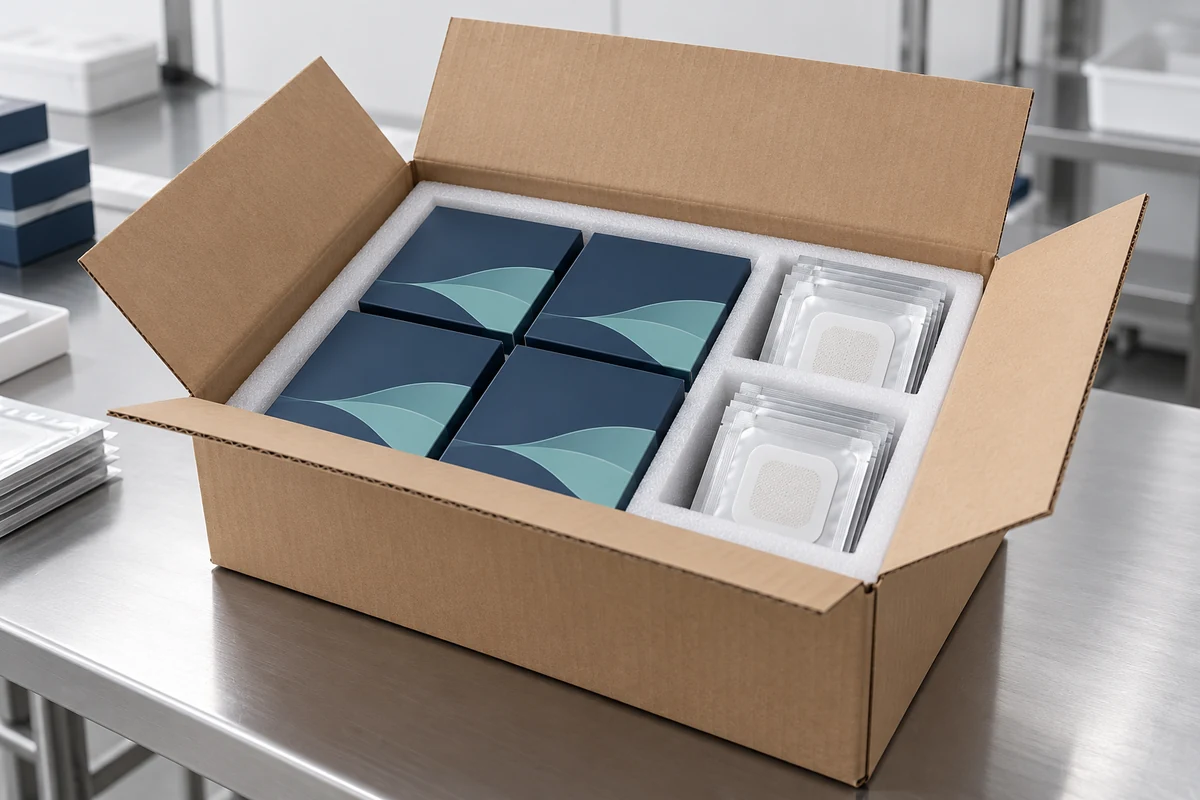
A patch can pass release testing and still arrive with crushed arrays, scuffed pouches or a compromised seal. Shipping qualification evaluates the actual retail and transit configuration together. Define the expected parcel or pallet route, test the packed unit and inspect the patches after the sequence, not just the outer box.
Begin with the route and the failure you need to catch
An e-commerce parcel, a mixed distributor carton and a palletized shipment face different handling. The first design question is what moves inside the shipper. A tray can protect tips from direct pressure, but loose retail boxes can rub against one another. Map the intended route, pack quantity and handling format before selecting cushioning. Then state which post-transport findings trigger rejection: tip damage, broken cavity, open seal, artwork abrasion or moisture-related change.
- Primary pouch and tray configuration.
- Retail carton size, count and orientation.
- Transit carton, divider or cushioning construction.
- Parcel, pallet or mixed-case distribution route.
- Post-transport inspection and test criteria.
What ASTM D4169 can and cannot show
ASTM D4169-23e1 provides a laboratory framework for exposing shipping units to a sequence of hazards representing distribution cycles. It is a method reference, not a blanket certificate for a product. A test report should identify the selected cycle, severity, sample configuration and observations. ASTM notes that for a performance test the unit stays unopened until the sequence is complete. If the likely route is single-parcel delivery, the standard itself points users to consider ASTM D7386-25.
Inspect the patch, not only the carton
After the chosen simulation, document damage to the outer case and retail pack, then examine the array and seal against pre-agreed criteria. If packaging is a moisture barrier, a post-shipment seal check may be more informative than a simple visual check of the carton. Compare with the pre-test sample and record any test method used. The pouch-seal guide covers seal evidence; pilot-batch planning explains when the final pack should enter the development program.
Make the tested configuration traceable
A result belongs to the configuration tested. Changing the tray wall, number of cartons per case, cushioning or pouch material can make a prior report less relevant. Keep a drawing or pack-out instruction with the test record and specify which changes require review. ISO 22716:2007 addresses quality practices for cosmetic production, control, storage and shipment; it does not supply one transport test cycle for every product or distribution route.
FAQ
Does an intact transit carton prove the microneedle array is intact?
No. Examine the retail pack, seal and patch against defined criteria after the transport sequence. Internal movement can damage a product without obvious outer-box damage.
Can an ASTM D4169 report be reused after changing pack-out?
Review the change first. A different carton count, insert, tray or orientation may alter the hazards reaching the patch, so the earlier result may not represent the new configuration.
Should the shipping study use an empty carton?
For product qualification, use a representative packed shipping unit and record its contents and configuration. An empty-carton test does not establish finished-product condition on arrival.
References
- ASTM D4169-23e1, Performance Testing of Shipping Containers and Systems.
- ISO 22716:2007, Cosmetics Good Manufacturing Practices.
When requesting a quote, include the destination markets, carton count and distribution route in the OEM project brief. Those details determine which shipping configuration has to be tested.
Turn the research into a manufacturable brief
Share your target market, peptide concept, patch geometry, packaging direction and estimated quantity. We will map the project to sampling, pilot and scale-up stages.