
HYTANBIO · CHANGZHOU BASE · R&D CONCEPTS
GLP-1 Peptide Microneedle R&D Platform
A source-grounded look at the HYTAN peptide-loaded dissolving microneedle platform: the delivery question, structure and formulation work, analytical checks, packaging options and the evidence still needed before a drug patch could be considered for human use.
Research status, not a product listing. HYTANBIO does not offer semaglutide, tirzepatide or retatrutide microneedle patches as approved consumer products, cosmetic OEM products or substitutes for prescribed medication. The deck-supplied test figures and facility claims below have not yet been independently verified for publication as specifications.
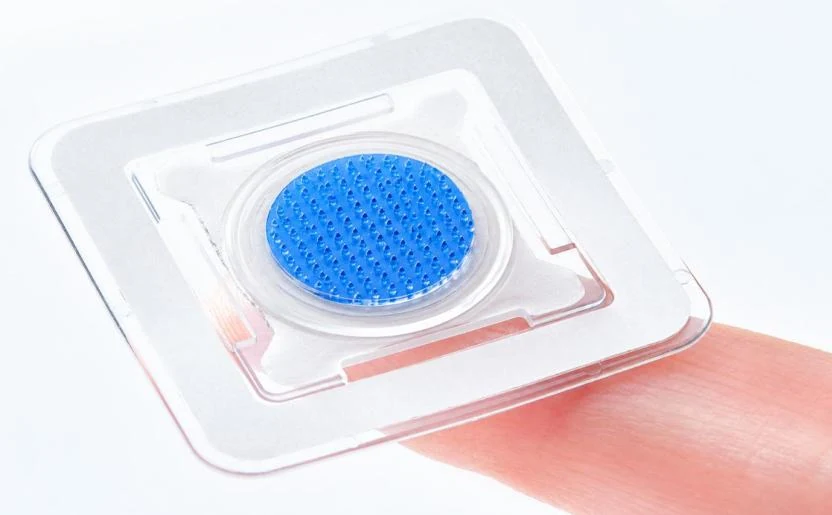
01 / Market background
Why delivery formats are being studied
The commercial scale of approved metabolic medicines explains interest in new routes, but sales figures do not prove that a microneedle patch works. Any patch would need its own pharmaceutical development and authorization.
The presentation compares 2024 and 2025 Mounjaro/Zepbound revenue (about USD 16.5bn versus 36.5bn; approximately +122%). These are company-reported brand sales, not a global GLP-1 market estimate, and should not be added to Novo Nordisk’s differently reported figure. The market context points to demand and delivery innovation, not demonstrated patch efficacy.
02 / Delivery question
Why investigate a peptide-loaded microneedle patch?
Peptides face digestive degradation and an intact-skin barrier. Injection devices create their own administration and sharps-handling demands. A dissolving array is an investigational way to explore skin entry; it is not an established replacement for the approved oral or injectable products.
Oral route
Large peptide molecules generally need formulation-specific strategies to achieve oral exposure. The approval of one oral product cannot be transferred to another formulation.
Injection route
Approved injections have known administration procedures and product-specific evidence. A patch may alter the user experience, but acceptance and comparative value need human data.
Skin barrier
The stratum corneum limits passive transport of large hydrophilic peptides. Microneedles are studied to create a temporary route across this barrier; delivery and safety must be measured, not assumed.
03 / HYTAN technology
One research platform, several interdependent workstreams
The presentation describes HYTAN as an ongoing engineering platform, not a finished transdermal drug line. Structure, formulation, skin-delivery testing and product engineering have to be designed together, then challenged against release and stability data.
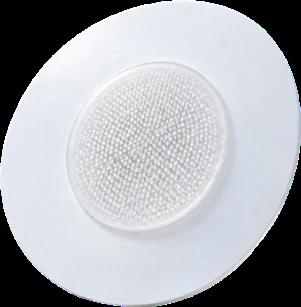
Structure design
Review array outline, needle height, tip and spacing alongside mechanical integrity and manufacturability.
Formulation development
Screen peptide compatibility, matrix composition, content uniformity, storage and packaging interactions.
Skin-delivery testing
Measure insertion, dissolution, release and exposure in methods appropriate to the development stage.
Product engineering
Coordinate backing, blister or pouch, labeling, handling and the intended research setting.
The source deck names semaglutide, tirzepatide, retatrutide, TB-500, BPC-157 and GHK-Cu. These are not one interchangeable product family: the first three are therapeutic/investigational metabolic-drug topics; TB-500 and BPC-157 require their own legal and evidence review; GHK-Cu may be assessed for a separate cosmetic brief. Listing a molecule here is not an offer to manufacture or sell a human-use patch.
04 / Source-deck evidence review
What the supplied images show—and what they do not yet prove
Below are substantive pictures embedded in the presentation, regrouped into a website gallery with neutral captions. Their provenance, test methods, sample identity, batch records and independent review were not supplied with the deck. Accordingly, numerical statements are documented as deck claims, not confirmed HYTANBIO specifications.
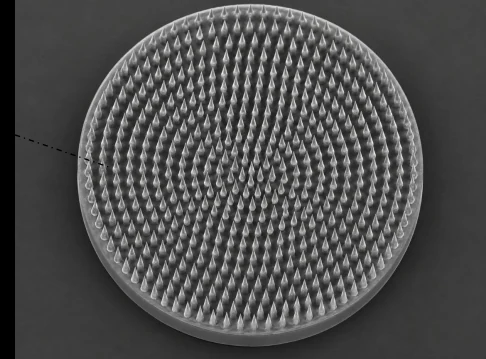
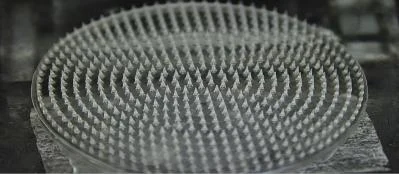
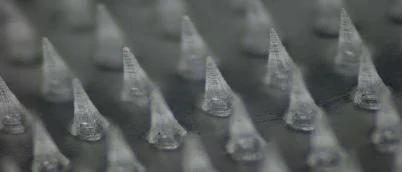
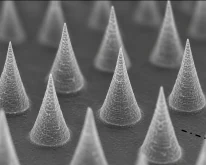
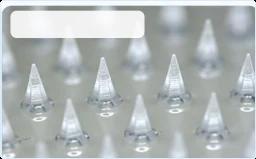
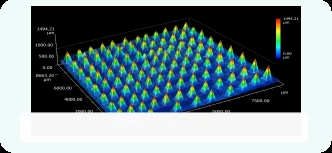
Array morphology and needle tips
The deck illustrates overall array shape and close-up tip morphology. It reports complete needle formation above 99% and needle consistency above 95%, but gives no accompanying method, batch count or signed report. The “one-tenth of a human hair” comparison is also a deck description, not a measured release criterion on this page.
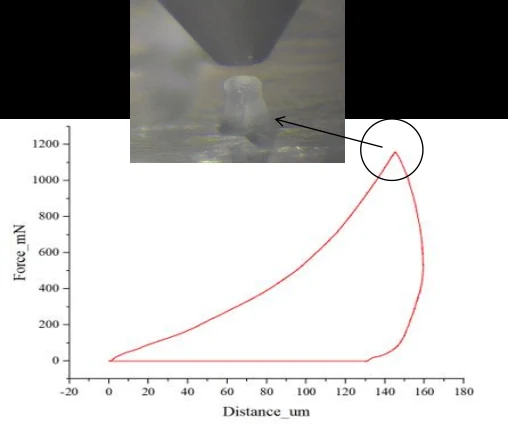
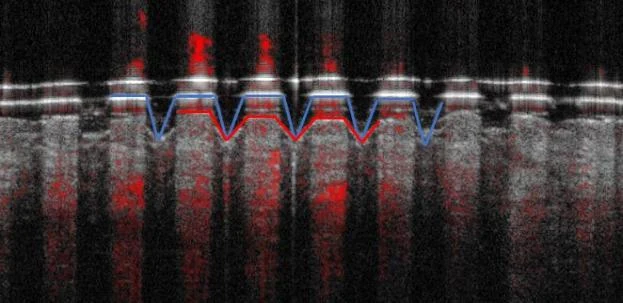
Mechanical and skin-insertion illustrations
The deck shows a force curve and an optical coherence tomography (OCT) image. It states “>1 N/150 µm” as a performance measure. Without the protocol, replicates and test identity, this remains a source-deck figure. An OCT image alone does not demonstrate systemic exposure, dose equivalence, patient safety or efficacy.
Assay and stability illustrations
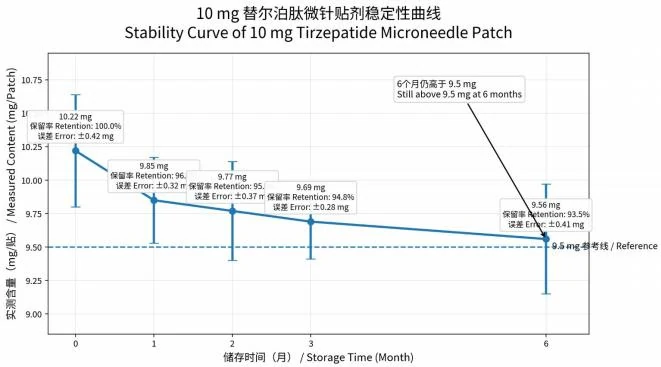
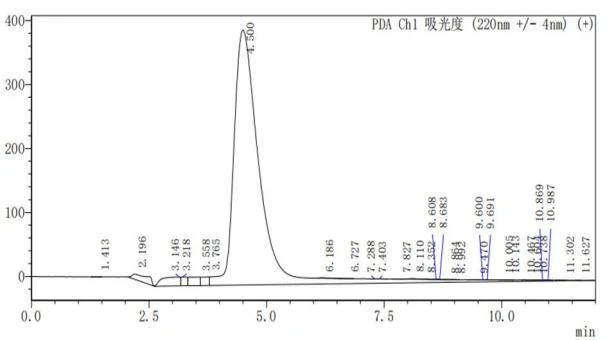
The presentation includes a chromatogram and a chart described as a 10 mg tirzepatide-patch stability series: 10.22 mg initially, then 9.85, 9.77, 9.69 and 9.56 mg at the plotted intervals through month six (93.5% retention at month six). It also states room-temperature shelf life over six months and peptide retention over 90%. These are unverified source-supplied examples, not a labeled shelf life, released product strength, or evidence for human dosing. The formulation text mentions trehalose, buffered saline, preservatives and excipients as development considerations, not a published recipe.
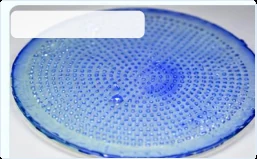
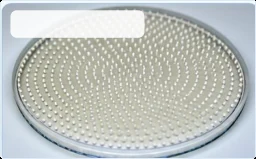
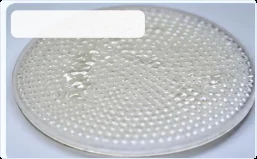
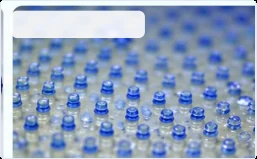
Integrated and layered array studies
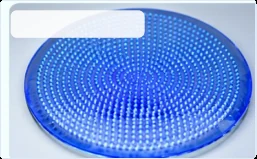
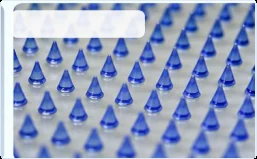
The source compares integrated needles with layered needles, suggesting a trade-off between total loading and dose placement. It shows overall morphology and close-up tips at two views for each architecture. The images document visual examples only; release, dose uniformity and clinical relevance still need linked results.

05 / Modular product concept
Candidate molecules, geometry and packaging are separate decisions
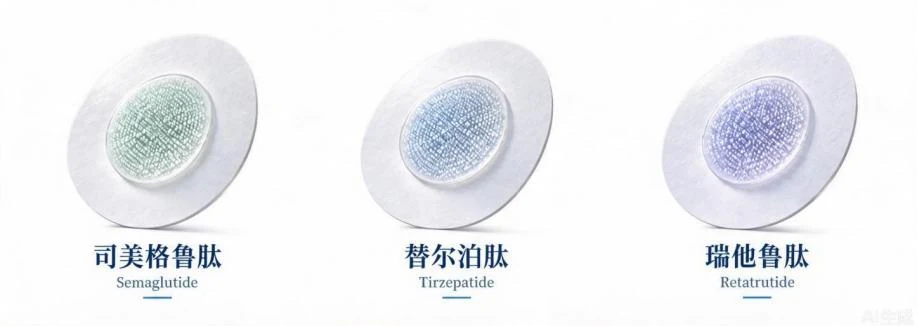
The deck pairs semaglutide, tirzepatide and retatrutide with three presentation-only patch mockups and a nominal 0.5–10 mg/patch design range. These are proposed R&D targets; none is a released drug strength, approved dosage, available OEM SKU or instruction for patients. Retatrutide remains investigational.
Array concept
The presentation gives 600–1,000 µm as an example needle-length range and round, square or custom shapes. Selection depends on a project-specific test plan and risk assessment.
Layer stack
The illustrated pack contains a blister lidding film, microneedle array, adhesive backing and blister shell. Compatibility, moisture protection and usability would need verification.
OEM/ODM presentation
Potential formats include blisters, foil pouches, trays, single- or multipatch packs, labels and cartons. This is packaging design scope, not a drug manufacturing authorization.
06 / Quality pathway
From material identity to a documented release decision
The presentation proposes supplier approval, incoming inspection, controlled production, final testing, release review and retained traceability. That sequence is a useful development framework; implementation, site scope and regulatory suitability require project evidence.
Materials and supply
Supplier qualification, specifications, certificates of analysis, receipt, batch identification and storage records.
Process control
Controlled records for preparation, molding and drying, with morphology and tip-integrity checks.
Final testing
Identity, assay, content uniformity, related substances, structure, insertion, dissolution/release and stability as justified by intended use.
07 / Buyer questions
Questions a qualified research partner should ask
Are any of these GLP-1 microneedle patches for sale?
No. The presentation is treated as an R&D concept and evidence-review source. No approved HYTANBIO semaglutide, tirzepatide or retatrutide consumer patch is offered on this site.
Does the deck’s stability graph establish a six-month shelf life?
No. The chart is source-supplied and has no linked protocol, lot history, validated assay, packaging definition or signed report here. A shelf-life claim needs product-specific supporting work.
What would make a pharmaceutical inquiry reviewable?
Define the target jurisdiction and intended use, identify the lawful sponsor and development stage, and provide a non-confidential evidence plan for quality, exposure, safety, usability and regulatory review. Cosmetic private-label qualification is a different pathway.
Can a brand use the presentation’s nominal loads or application sequence?
No. The figures are R&D proposals, not verified strength, dosing, wear or patient-use instructions. They cannot be used to market, self-administer or replace approved medicine.
Next step
Discuss the research question before the product claim
Share the molecule, intended jurisdiction, development stage and available non-confidential evidence. We will separate what can be screened as a cosmetic peptide concept from what requires an appropriate pharmaceutical development route.
Source: HYTAN_GLP1_原PPT版_英文版.pptx, 15-slide English presentation supplied 26 October 2026. Research and regulatory review updated 26 October 2026. Visuals are supplied deck images, not new factory photographs. See the regulatory-status explainer for current product-category boundaries.