
Peptide microneedle patch technical guide
Custom Shape Peptide Microneedle Patch OEM Guide
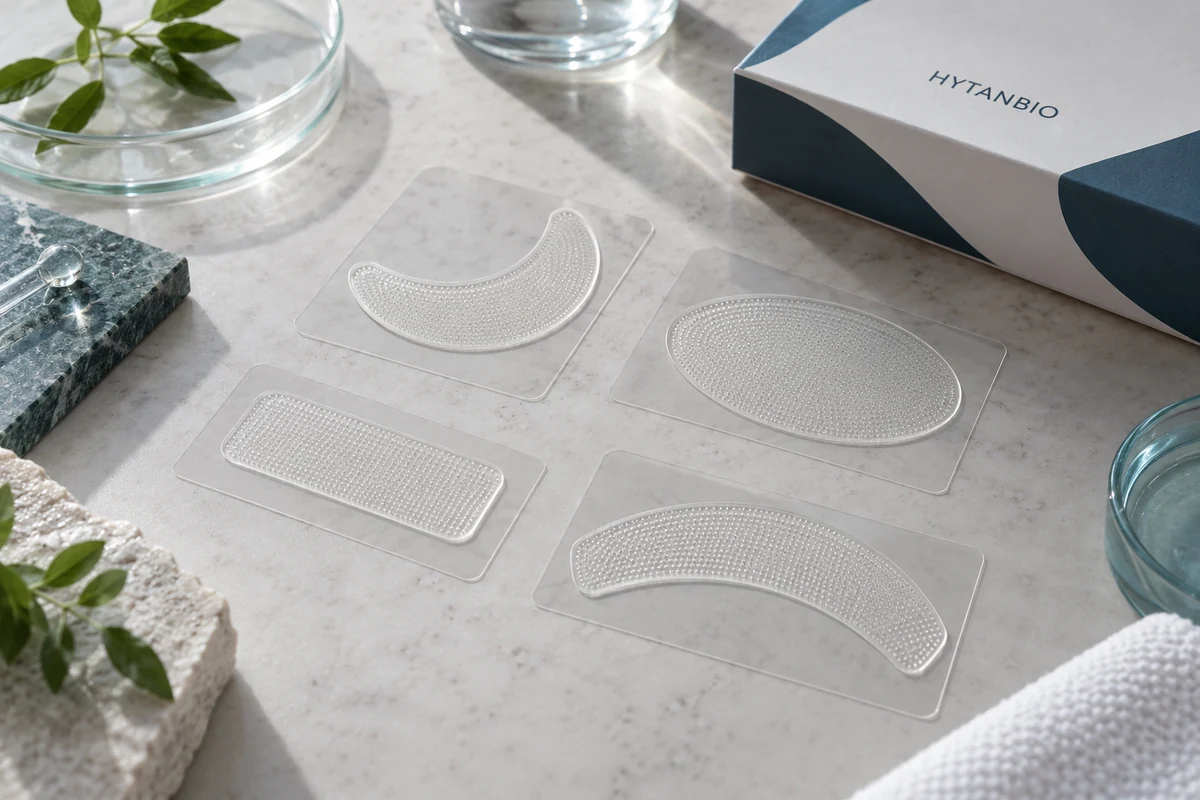
Application-area product families
Forehead strips support broad line-focused positioning; smile-line pairs use narrow curves; eye patches require orbital-area fit; neck strips need flexibility over a larger area; lip-line shapes require careful placement; targeted dots concentrate the array in a compact footprint.
Mold and array decisions
Custom shape does not only mean die cutting the backing. Array footprint, needle density, needle height, tip definition and demolding behavior must be reviewed with the patch outline and formula rheology.
Adhesion and comfort
The adhesive border must hold the array against clean, dry skin without covering the active needle field. Curved areas and facial movement can require different backing flexibility and border width.
MOQ and pilot production
A standardized array with a custom backing may reduce development complexity. A fully custom mold generally requires more tooling, sampling and validation. Pilot production should confirm yield and packaging before a bulk order.
Frequently asked questions
Can the patch be made in any shape?
Many shapes are possible, but very narrow features, sharp corners or large unsupported areas can reduce manufacturability and handling.
What should be fixed before requesting a quote?
Application area, approximate dimensions, target formula, array area, pack count, target market, order quantity and packaging tier.
Turn the research into a manufacturable brief
Share your target market, peptide concept, patch geometry, packaging direction and estimated quantity. We will map the project to sampling, pilot and scale-up stages.