
Peptide microneedle patch technical guide
Copper Tripeptide-1 Microneedle Patch Development
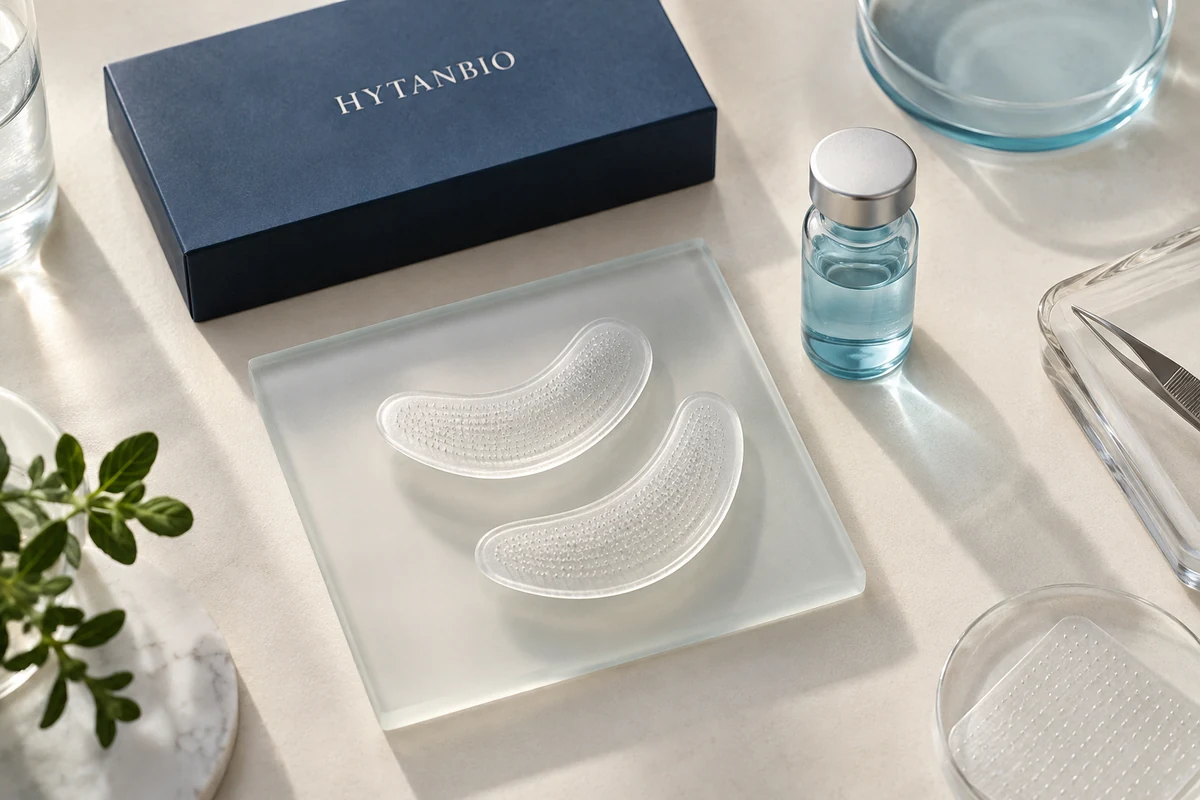
Why copper peptide is commercially attractive
Copper peptide has strong consumer recognition and a science-led premium image. It can anchor eye-area, targeted renewal and multi-peptide programs, especially when the packaging communicates formula care without making medical claims.
Color and oxidation considerations
The raw material may contribute blue coloration, which can be used intentionally or controlled through loading and package design. Oxygen, trace metals, pH and incompatible antioxidants can affect stability, so accelerated and real-time studies should include appearance, assay and performance.
Array and package compatibility
Evaluate mold release, tip definition, mechanical strength, dissolution and migration within the matrix. A high-barrier foil sachet and protective tray are common starting points for moisture and compression protection.
Formulation combinations
Possible concepts include copper peptide plus HA, copper peptide eye patches and carefully screened multi-peptide blends. Compatibility should be demonstrated rather than assumed from the separate ingredients.
Frequently asked questions
Will the patch be blue?
It may show a blue or blue-green tone depending on raw material and loading. Color specifications should be defined during development.
Is Copper Tripeptide-1 suitable for every market?
Market status, INCI labeling and claims should be checked for each target country before launch.
Turn the research into a manufacturable brief
Share your target market, peptide concept, patch geometry, packaging direction and estimated quantity. We will map the project to sampling, pilot and scale-up stages.